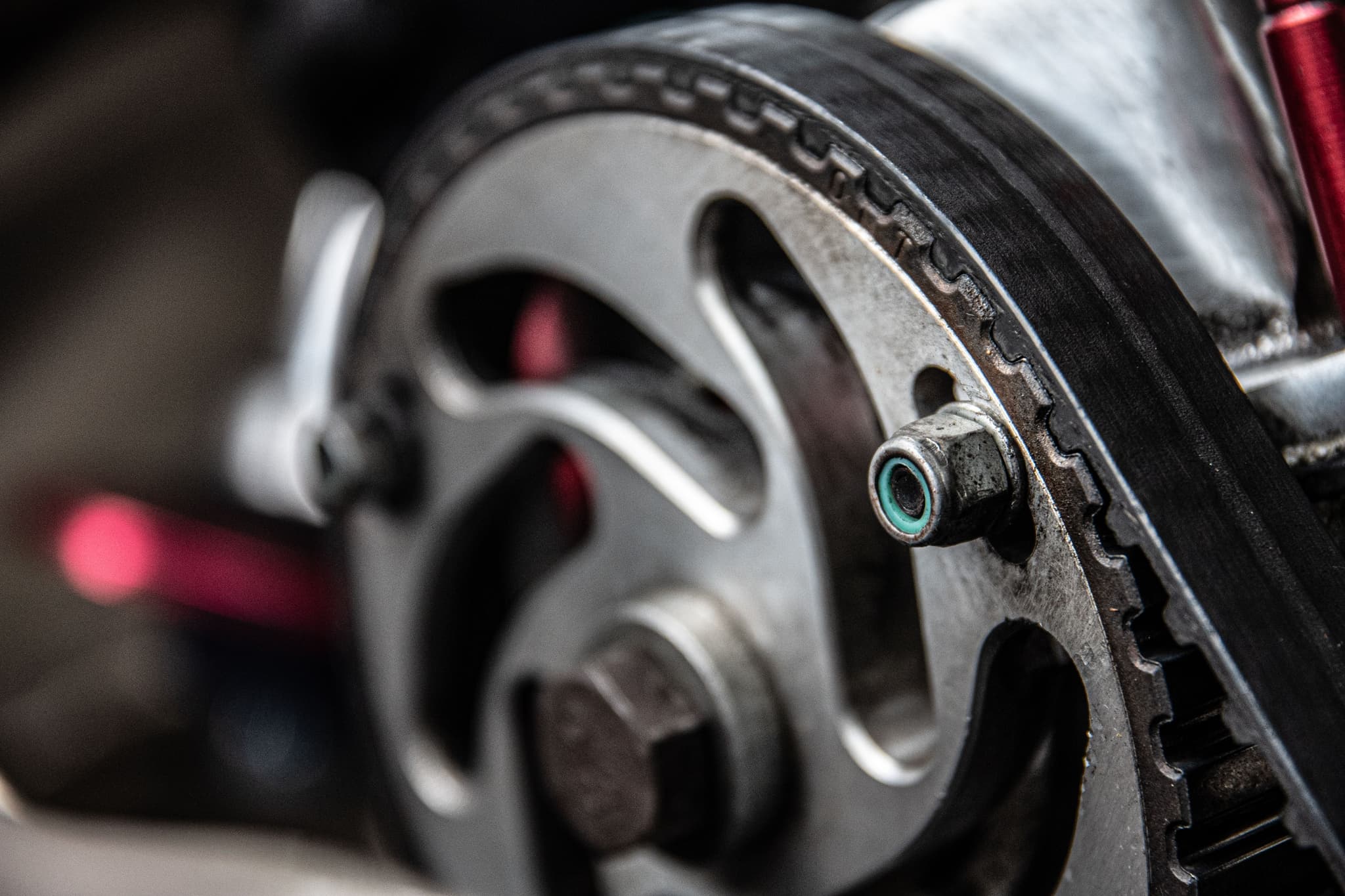
The timing belt (or timing chain) is the critical synchronization link between your engine's crankshaft and camshafts. In modern "interference" engines, a broken timing belt causes the pistons to collide with open valves at thousands of revolutions per minute, resulting in catastrophic engine destruction.
1. Timing Belt Replacement Intervals: Kilometers vs. Time Automakers typically specify timing belt replacement every 100,000 to 160,000 km OR 7 years (whichever comes first). Rubber compounds oxidize, dry out, and lose tensile strength over time even in low-mileage vehicles.
2. The Complete Timing Kit: Never Replace Just the Belt When replacing a timing belt, our technicians always install a comprehensive timing component kit: - **Hydraulic Tensioner & Idler Pulleys**: Worn pulley bearings can seize, shredding a brand-new belt in seconds. - **Engine Water Pump**: In most timing belt configurations, the water pump is driven directly by the timing belt. Replacing the water pump simultaneously eliminates paying duplicate labor later. - **Camshaft & Crankshaft Oil Seals**: Prevents oil leaks from contaminating and softening the new rubber timing belt.
3. Timing Chain Maintenance & Oil Cleanliness If your vehicle uses a metal timing chain instead of a rubber belt, the chain is lubricated directly by engine oil. Dirty or low engine oil causes hydraulic chain tensioners to slacken, resulting in chain stretch, guide breakage, and out-of-sync valve timing trouble codes.
If you are unsure of your vehicle's timing belt replacement history, schedule an inspection with Golden Auto Service immediately to avoid multi-thousand-dollar engine rebuild costs.